

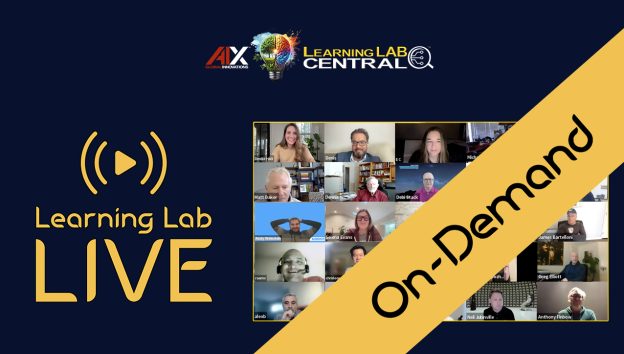
Learning Lab LIVE: UNIT 09 – Understanding Agency – Active Inference Agents vs LLMs

This Learning Lab LIVE session focuses on one of the most misunderstood concepts in artificial intelligence today: agency. It explains what true agency means in the context of intelligent systems and why large language models, despite their impressive generative capabilities, do not possess genuine decision-making autonomy. Viewers are guided through the core distinction between correlation-based systems that generate outputs and Active Inference Agents that perceive, reason, and act within real-world environments.
The session introduces Active Inference as a biologically grounded framework built on the Free Energy Principle, enabling agents to continuously update their internal models, infer causal relationships, and adapt in real time. Through practical examples, the presentation illustrates why causal reasoning, situational awareness, and the ability to respond to surprise are essential for real-world intelligence—and why these capabilities remain outside the reach of LLM-based systems.
By the end of this session, viewers will clearly understand why Active Inference Agents represent a fundamental shift beyond LLM-based “agentic” AI. This presentation is designed for enterprise leaders, technologists, and innovators seeking to deploy trustworthy, energy-efficient, and truly autonomous intelligent systems across mission-critical environments.
Key Topics Covered
- What agency actually means in AI
Defines agency as the ability to perceive, decide, and act autonomously, emphasizing causal understanding, goal-directed behavior, and real-time adaptability. - Why LLMs lack true agency
Explains why large language models rely on correlation and pattern matching, lack world models, cannot reason about cause and effect, and require retraining to update knowledge. - Causal reasoning and decision-making
Demonstrates why understanding the “why” behind observations is essential for informed action, using real-world scenarios where different causes require different responses. - The Free Energy Principle and Active Inference
Introduces the scientific foundation of Active Inference and how agents reduce uncertainty through continuous prediction, observation, and belief updating. - Adaptation versus static intelligence
Contrasts static, pretrained AI systems with Active Inference Agents that learn continuously and self-organize in dynamic environments. - Why LLMs fail in real-world settings
Explores issues such as hallucinations, unreliability, lack of perception, and inability to handle surprise in physical and operational environments. - Energy efficiency and sustainability
Explains why Active Inference operates with brain-like energy efficiency, while LLMs require massive computational and energy resources. - The role of the Spatial Web in autonomous agency
Describes how HSTP and HSML enable distributed, interoperable Intelligent Agents to operate across networks with shared context and decentralized compute. - Multi-agent coordination and shared protentions
Explains how Active Inference Agents coordinate through shared anticipations of future states, enabling collective intelligence and synchronized action. - Decision-making under uncertainty
Introduces partially observable Markov decision processes and how agents balance learning, prediction, and action when information is incomplete. - Renormalizing Generative Models (RGMs)
Explains how RGMs extend Active Inference across multiple scales, enabling unified perception, planning, and generalization in complex systems. - Enterprise use cases for Active Inference Agents
Covers applications in HR, supply chain optimization, security, customer experience, risk mitigation, and operational automation. - Autonomous systems and digital twins
Explores how Active Inference powers adaptive robotics, fleet management, predictive maintenance, and real-time digital twins. - Everyday and enterprise future scenarios
Illustrates how Active Inference Agents integrate into daily life, enterprise roles, and global operations through adaptive, context-aware assistance. - Preparing for the next era of autonomous intelligence
Outlines why enterprises must move beyond LLM-based automation and adopt Active Inference to achieve reliable, explainable, and scalable autonomy.
About Instructor



 +19
enrolled
+19
enrolled
Course Includes
- 1 Course File
Ratings and Reviews

Reviewing this course reinforces why I could not recommend to any consulting clients for them to set up their AI structures using LLMs. It was better to wait until I found Active Inference :).